
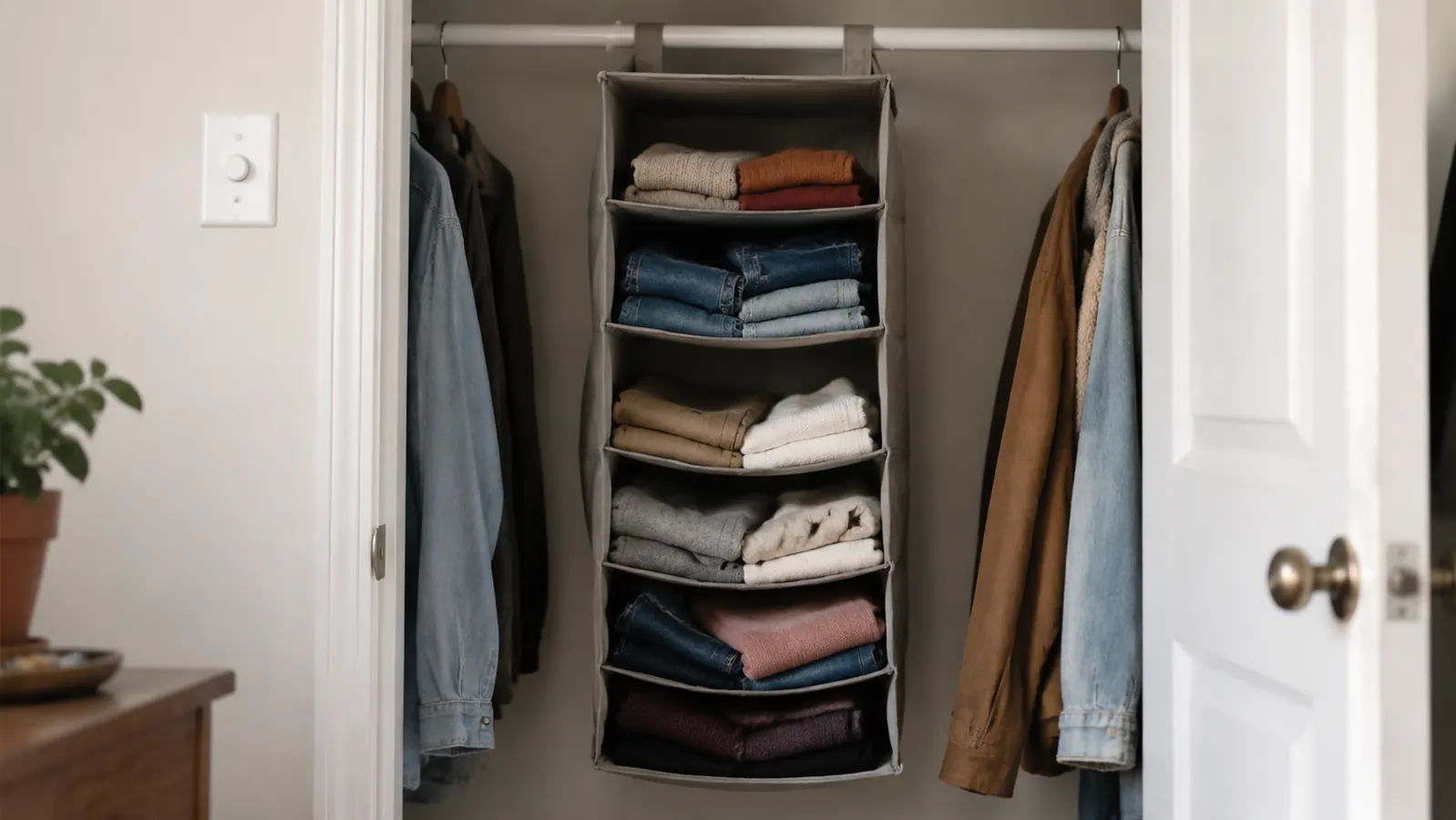
Here is the thing about a product with 14,000 Amazon reviews and a 4.6-star average: most of those reviews are written in the first week. Someone gets excited, it looks good on their rod, they write five stars. Six months later nobody goes back to update that review when the bottom two shelves have turned into a ski slope. The MAX Houser 6-tier hanging closet organizer is a genuinely useful product for a specific set of conditions, but the hype around it has created a gap between what buyers expect and what they get. I am going to close that gap.
I bought the MAX Houser for a narrow bedroom closet and have put it through real daily use. I have also watched it fail in specific ways. This is not a hit piece, the organizer earns its price for the right use case. But if you go in expecting a fabric shelf that holds anything you want to pile onto it, you are going to be disappointed. Let me tell you exactly what this shelf can and cannot do before you order.
The Quick Verdict
A genuinely useful no-drill shelf for lightweight items in a small rental closet, but the sag is real, the weight limit is strict, and the hype sets unrealistic expectations.
Amazon Check Today's Price →Know what it holds before it arrives. Then order with zero surprises.
The MAX Houser works well for folded tees, scarves, gym clothes, and light accessories. If that is your use case, it is an easy buy at the current price. Check what Amazon has it listed for today.
Amazon Check Today's Price on Amazon →What Nobody Mentions About the Sag
Every hanging fabric organizer sags eventually. That is physics. What matters is which tiers sag, how fast, and whether the sag is functional or structural. The MAX Houser has a specific sag pattern that the positive reviews almost never mention: it is the bottom two tiers, and it happens faster than you expect.
The wire frame on this organizer is thin. That is how it stays under twelve dollars and folds flat for storage. Each shelf wire can visibly flex if you push on it with moderate finger pressure. Under a light load, that flex is cosmetic, the shelf dips slightly but holds your folded tees just fine. Under a heavier load, the flex becomes permanent. The wire corners at the front of the lower tiers bow outward, the shelf fabric angles downward toward the front, and once that happens the frame does not spring back. You can unload the shelf completely and the deformation stays. That is the truth the 4.6-star average buries.
The reason it happens at the bottom tiers specifically is geometry. The hook at the top distributes the load into the metal frame vertically. The further down you go, the more the load is cantilevered away from the hook point. Tier six is essentially asking a thin wire loop to hold weight at the furthest mechanical disadvantage. Two to three pounds on tier six will hold. Four pounds or more, over a few weeks, will start permanently deforming the frame. Most buyers do not know this when they load the shelf, because nothing in the listing or instructions tells them.
The Fabric: What It Actually Is, and Why It Matters
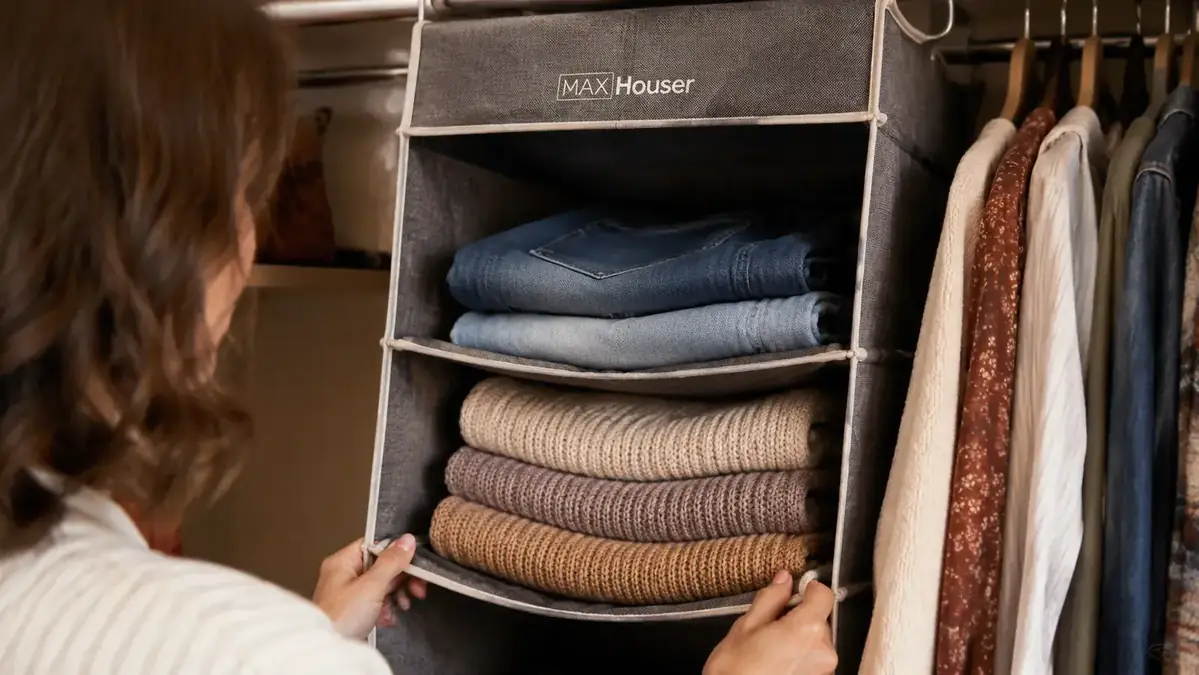
The shelf panels are non-woven polyester, the same material you find inside cheap cube organizer inserts or reusable grocery bags. It is not canvas. It is not oxford cloth. It is a bonded fiber material that holds its shape reasonably well under light loads but has no real structural contribution to the shelf. The wire frame does the work; the fabric is just the surface you set things on.
That matters for a few reasons. First, the non-woven material can pill and thin over time if you drag rough or textured items across it repeatedly. Denim with metal rivets, stiff canvas bags with abrasive bottoms, even a heavy textured knit can slowly work at the fabric surface. After extended use, you may notice the shelf surface starting to fuzz or thin in the spot where you place and remove items most often. It is not a catastrophic failure, but it is a sign the material has a finite lifespan. Second, the non-woven fabric does not stretch back if it takes a long-term compression set from a heavy item. Park a dense folded sweater on tier five for three months and the fabric will have a faint impression of it, similar to what happens to cheap foam cushions. The impression does not disappear when you remove the load.
None of this is unique to MAX Houser. Every hanging fabric organizer at this price point uses the same material or something close to it. The point is to set accurate expectations: this is a temporary-use or light-duty shelf, not a long-term storage solution for heavy folded items.
What This Shelf Genuinely Cannot Hold
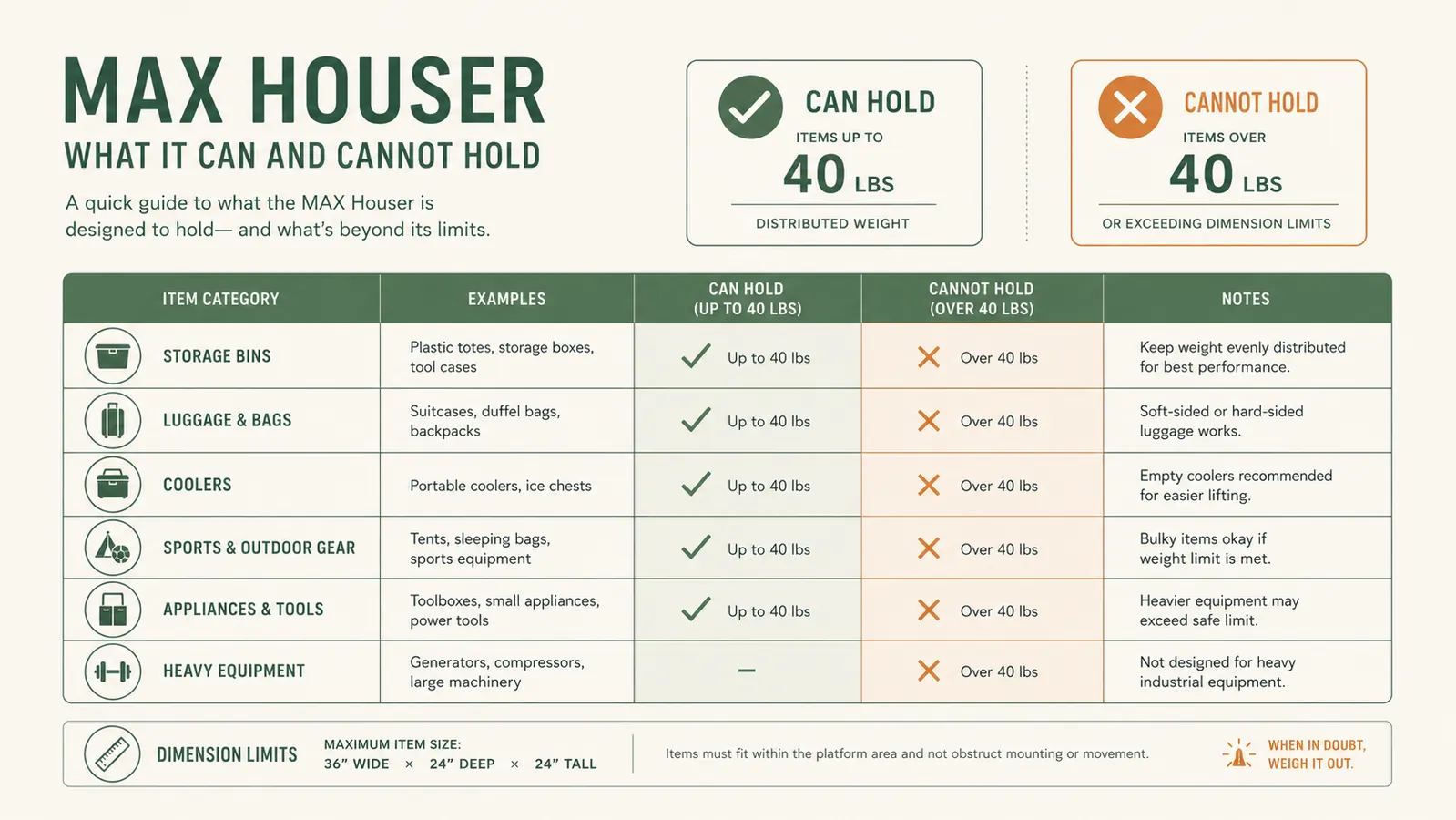
Let me be specific, because the listing uses vague language about capacity and most buyers fill in the blanks optimistically. Here is the honest breakdown by item category.
Jeans: a single pair of folded jeans weighs between one and a half to two and a half pounds depending on the cut and fabric weight. That is within the range for the top four tiers but will stress the bottom two if you stack more than one pair. If you want to store folded jeans in this organizer, keep them on tiers two through four maximum, and limit yourself to two pairs per tier.
Shoes: do not do it. A pair of sneakers or flats weighs two to four pounds and their shape means they sit unevenly on the wire-framed fabric shelf. One shoe will hang over the front wire loop, shifting the weight forward, and that forward lean is what causes the frame to bow outward fastest. Shoes also compress the shelf panel material in a way that leaves a permanent dent. The MAX Houser is not a shoe shelf. If you need renter-friendly shoe storage, that is a completely different product category.
Bulky sweaters and hoodies: a dense knit winter sweater can weigh two to three pounds folded. Stack two on a lower tier and you are at the limit. More importantly, the 11.5-inch shelf depth means a large sweater folded to standard size will have its edges hanging over the front wire loop. When it hangs over, it shifts the center of gravity forward and puts asymmetric stress on that front wire corner. That is the corner that bows. Stick to thin knits and lighter layers on this shelf.
Anything over 14 inches wide: the shelf interior is 11.25 inches wide. A standard men's t-shirt folded in thirds fits fine. A larger women's cardigan folded the same way may hang over both sides. Items that overhang the wire frame on either side also contribute to uneven loading and faster deformation of the frame corners.
The Side Pockets: Useful for One Thing, Useless for Everything Else
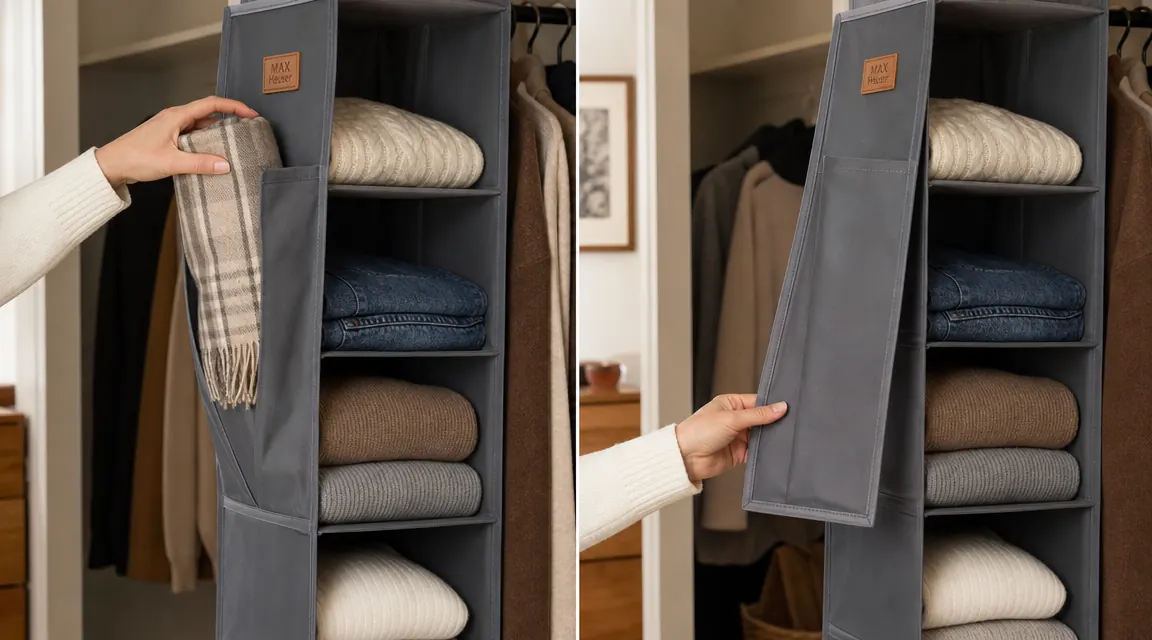
The two side pockets on the MAX Houser get enthusiastic mentions in a lot of reviews, often listed as a bonus feature that makes the organizer stand out. They are useful, but the useful range is narrower than the reviews suggest.
Each pocket is roughly 10 inches tall and 4 inches deep. That 4-inch depth is the limiting factor. A rolled scarf fits. A small clutch bag fits. A pair of sunglasses in a slim case fits. A rolled pair of ankle socks fits. What does not fit: any item that is wider than 4 inches when placed flat, any rigid-sided bag, any pair of shoes, any folded garment thicker than a thin tank top. The pockets are also a single open slot with no divider, so if you put two items in one pocket they shift around against each other. I keep one item per pocket and that works fine, but if you are imagining these pockets holding a meaningful volume of accessories, scale that expectation back significantly.
The pocket stitching has held up well in my use. They have not pulled away from the main body of the organizer. But because the pockets hang off the side of the organizer rather than connecting to the wire frame structurally, a heavy item in a pocket will cause the entire organizer to tilt slightly toward that side. Keep pockets light and roughly balanced side to side.
14,000 reviews and most of them were written in week one. The sag shows up later, and nobody goes back to update.
The Price vs. Expectation Problem
The MAX Houser lists for around twelve dollars. At that price, it is a fair product. The steel wire frame, the non-woven shelves, the simple hook, the two side pockets, these are all appropriate for the cost. The problem is that 14,000 reviews and a 4.6-star rating creates an implied quality signal that exceeds what twelve dollars actually buys. Buyers see those numbers and unconsciously assume the product has been stress-tested and validated by a crowd. What they are actually seeing is 14,000 people who were happy with their purchase in the first week or two.
I have read through dozens of the one and two-star reviews on this listing. The failure pattern is consistent: buyers loaded it the same way they would load a wire shelf bolted to a wall, the bottom tiers bent or collapsed under that load, and the buyer felt misled. They were not misled by MAX Houser. They were misled by a star rating that signals durability without actually measuring it. The product does what it is built to do. It just is not built to do what a lot of buyers assume a 4.6-star product can handle.
If you buy this organizer knowing it is a lightweight fabric-and-wire shelf for light items at a low price, you will be satisfied. If you buy it expecting a robust storage system that handles everything you currently fold and stack, you will be returning it within a month.
The Setup Reality vs. the Marketing Photos
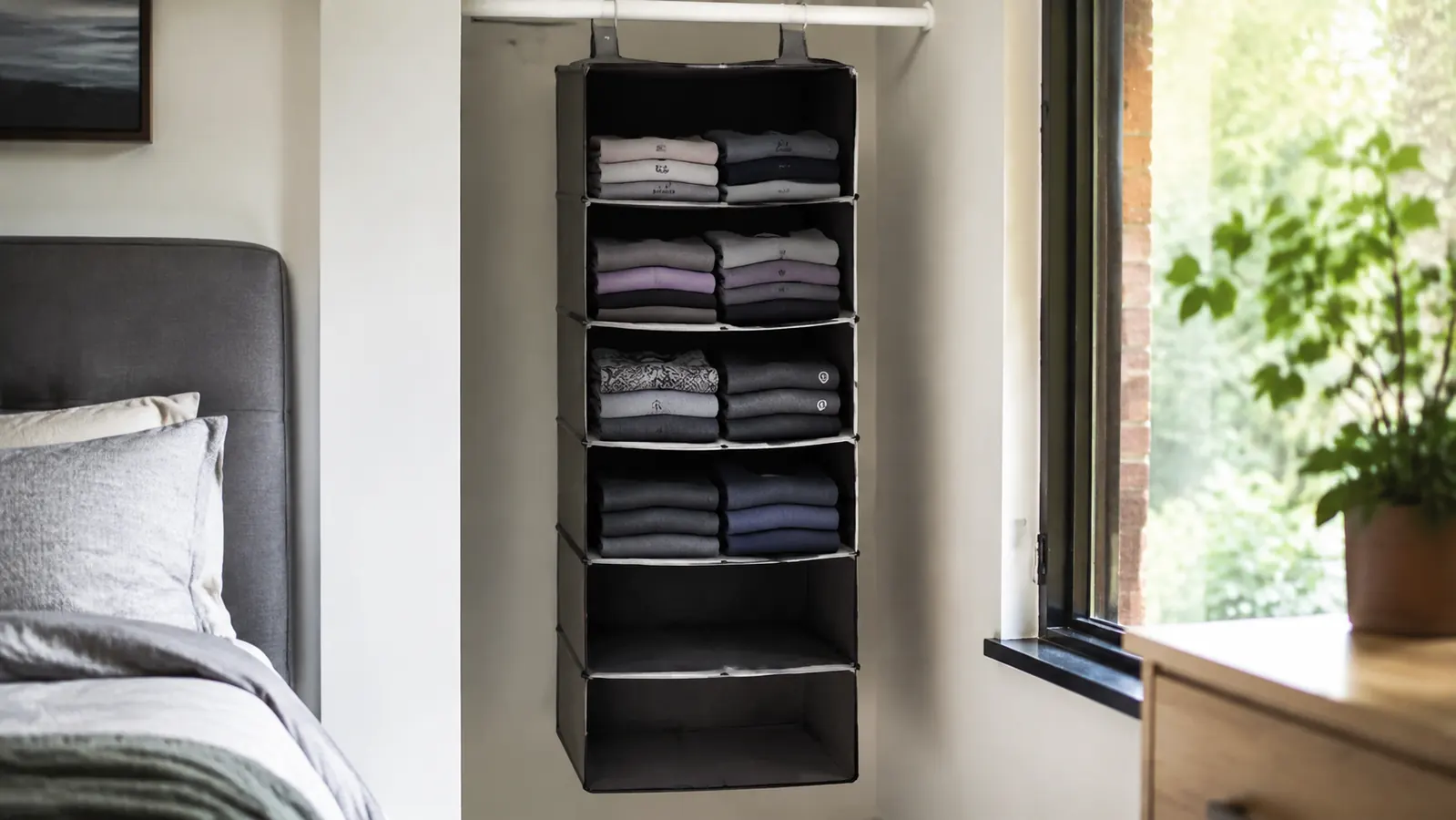
The product photos on Amazon show the organizer hanging in a spacious, well-lit closet with every shelf holding a modest, photogenic stack of clothes. The shelves are level. Everything is color-coordinated. It looks like a storage solution that could anchor a full wardrobe reorganization.
In a real rental closet, the picture is different. Most rental closets have a single rod at one height with limited vertical clearance below the rod. When you hang a 46-inch organizer from the rod, it may sit close to or on the floor of a shallow closet, which means the lower tiers are not fully open and hanging free but are compressed against the floor or the back wall. If the organizer bottom rests on the floor, the whole system stops functioning as a hanging shelf and becomes a propped-up accordion of fabric. Measure your closet rod height to floor before you order. You need at least 48 inches of clearance from rod to floor to have all six tiers hanging fully free.
The photos also do not show what happens when adjacent hanging clothes brush against the organizer constantly. In a full closet with normal daily movement, clothes on hangers will shift and press against the organizer repeatedly. Over time this can cause the organizer to slowly slide along the rod, especially if your rod has a painted or coated finish. The hook has no locking mechanism. It slides freely, which is convenient for repositioning but means the organizer will drift toward the heaviest side of the rod if it is not centered or if clothes consistently push it from one direction. This is an easy fix with a small rubber rod cap on each side of the hook, but the listing does not mention it.
What I Liked
- Under $15, genuinely low financial risk to try
- No tools, no drilling, hangs from any standard 1.25-inch rod in under a minute
- 12-inch width fits even very narrow rental closets without crowding hanging clothes
- Front wire loop on each shelf prevents folded items from sliding forward
- Folds completely flat for storage when not in use
- Non-woven surface wipes clean easily with a damp cloth
- Side pockets add two small-item spots without taking any shelf space
Where It Falls Short
- Bottom two tiers sag and permanently deform under more than three pounds each
- Wire frame corners bow outward when overloaded and do not spring back
- Cannot hold shoes, dense jeans stacks, or bulky knitwear on lower tiers
- Non-woven fabric thins and pils under rough or heavy items over time
- Hook has no lock so the organizer slides along the rod in a busy closet
- Requires at least 48 inches of clearance from rod to floor or the lower tiers compress against the floor
- 4.6-star average overstates long-term durability because most reviews are written in week one
Who This Is For
The MAX Houser is genuinely useful for renters who need lightweight, no-drill closet storage for folded tees, gym clothes, scarves, tank tops, and similar light items. If your closet rod height is at least 48 inches above the floor and you are loading each tier with two pounds or less of soft, lightweight items, this organizer will do exactly what it promises. It is also a solid secondary organizer for a guest room closet, a mudroom rod, or a kid's closet where small folded items need to be corralled without installing any hardware. For a parallel walkthrough on organizing a tight closet around this shelf, the how-to guide for small closet organization with hanging shelves goes into specific layout and loading strategies that will help you get the most out of it.
Who Should Skip It
Skip this shelf if you need to store anything with real weight: shoes, folded denim, heavy knit sweaters, hardcover books, or any dense item. Skip it if your rod-to-floor clearance is under 48 inches. Skip it if your closet rod is thicker than a standard 1.25 inches, because the hook will sit at an angle and the whole unit will lean forward constantly. Skip it if you want a long-term storage solution that holds its shape for years regardless of what you put in it. That product exists, it just costs more and likely requires wall mounting. Skip it if you are a renter with a thick, decorative rod or a walk-in closet where heavier wardrobe items need proper shelf support. And if you are still on the fence after reading this and want the full long-term picture, the long-term review covering twelve months of real use gives you the week-by-week performance detail that this overview skips.
Go in with the right expectations and it earns every dollar of its price.
Lightweight items, standard rod, at least 48 inches of clearance: those three conditions and the MAX Houser is a smart, low-risk closet fix. Check today's price on Amazon and see if it fits your closet setup.
Amazon Check Today's Price on Amazon →